
Three Brothers, One Hell
Survival in Auschwitz (Part 1)

Those of you who know me or have followed me for a long time will know that my MA thesis was on the first mass transport to Auschwitz. I will always be loyal to the survivors and victims of this transport. Some may say I have a weird attachment to these men. Still, I spent over a year, practically every day, immersed in their stories, and I will always come back to them throughout my career!
I was thinking about what to write about next, and I came across a testimony in my archives, and it was of one of the Hejka brothers. All three brothers arrived at Auschwitz on this transport, and yes, I am going to spoil the ending in the first paragraph! All of them survived the war and Auschwitz.
But before I write about their story, let’s talk about this brothers thing: there were lots of brothers (later, sisters too), fathers and sons, mothers and daughters, etc., who would arrive on the same transports together, sometimes on separate transports too. They would desperately try to help each other survive. Now I don’t have any siblings, so I could never understand that feeling of fighting for survival with someone who so closely shares your blood. Some of my readers may be estranged from their siblings or even have a distant relationship, or be like me, an only child, but let’s try to imagine that bond. That urge to protect your brother or sister, and possibly failing. That is what happens to the Drecki brothers. Zbigniew, the younger brother, survives while his older brother is beaten within an inch of his life by a kapo. He sustains life-threatening injuries and dies from internal bleeding a few weeks later.
Another example is the five Kupiec brothers from Podhale (the Tatra Mountains). All five arrived together on the second transport to Auschwitz on 20 June 1940. The sixth brother (the youngest) joined his brothers a few months later, in October 1940. They had been arrested for aiding the resistance movement. They spent months being brutally tortured in the Gestapo prison in Zakopane before being sent to Auschwitz. Out of the six brothers, only three survived the concentration camp system and the war.
I want my readers, yes, you, to be aware that it wasn’t just individuals who were sent to Auschwitz, but sometimes whole families. You may know about this when reading about the “extermination” aspect when you read about huge transports of Jews arriving at the camp. When they undergo selection, mothers are chosen for the gas chamber with their children or one person is selected to go to the left. The rest of the family goes to the right (to the gas chambers). But what I am writing about today and the experiences I am passing onto you, is that of those family members that were brought to the camp in the early years, when the function was still just a concentration camp, indirect extermination through work, disease, fear, torture and starvation.
I mentioned earlier that fathers and sons were also included in transports. During my initial research back in the day, I found a heartbreaking example. Stanisław and Adam Drohojowski. Stanisław was 55, an agricultural engineer, and his son, Adam, was 24 and a student. It was Adam who was murdered first, six months after arriving in the camp, the day before Christmas Eve on 23 December 1940. His father, Stanisław, lived for another three months before he was also murdered.
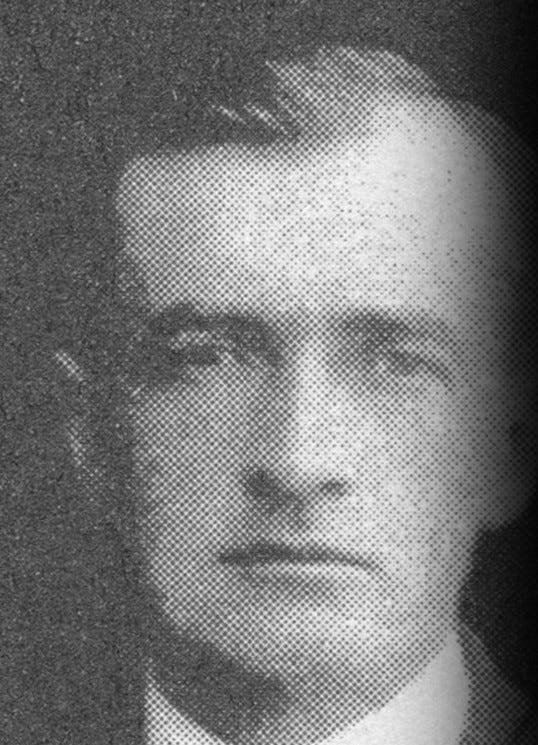
Unfortunately, we have no other information. Did Stanisław know his son was no longer alive? Was this one of the reasons he was also killed? Did he give up? We don’t know, but I’d like to think he fought to survive. I am always an optimist and try to believe in the best outcome. His age would also have played a considerable role. I don’t want to be ageist, but the statistics don’t lie. Men of his age had a much lower survival rate.
But back to who this whole post is about….. I can expect this might turn into a two-part article, as I do have A LOT to say, and what these three brothers go through is extensive…… So let me introduce you all to the eldest brother, Eugeniusz Hejka, who was 21 years old when he arrived at Auschwitz on the first mass transport on 14 June 1940. With him were the middle brother, Longin, 19, and the youngest, Jerzy, 15. He was one of the fifty-six under-18s that arrived on that transport, but he wasn’t the youngest. The youngest was 14 years old. But before we get to the Auschwitz part, what were the brothers doing before they arrived at the camp? Let’s start with Eugeniusz, the older brother.
Long story cut short, before the outbreak of the war, Eugeniusz joined the Cadet Corps no. 3/2, which was named after Marshal Rydz-Śmigły, a Polish military hero who fought during WW1 and in the Polish-Bolshevik war. He (Eugeniusz) then passed his exams in May 1939, thereby graduating from the cadet school, which would lead him to the Army next. However, we all know how the story goes. In a matter of a few months, everything would change, and Eugeniusz would have to cut his holidays short and be called up into the Polish Army.
On 1 September 1939, he was in the beautiful city of Toruń, the birthplace of Polish gingerbread. But the German Army was advancing quickly because the civilians witnessed columns upon columns of Polish soldiers passing through the city, heading towards Warsaw. Fear and despair gripped Eugeniusz; this whole time, he had been taught, like many other young Polish men, that Poland was a superpower. Yes, Poland fought for 123 years to regain its independence, and it fought valiantly; however, it was no match for the advancing German Army.
Eugeniusz headed for Warsaw; he was attached to a retreating infantry company. It was not an easy journey, which was filled with Stukka attacks, more air raids, bombings and an exhausting march to Modlin (north of Warsaw). His unit was trapped by the Germans and was completely surrounded and constantly shelled till they surrendered.
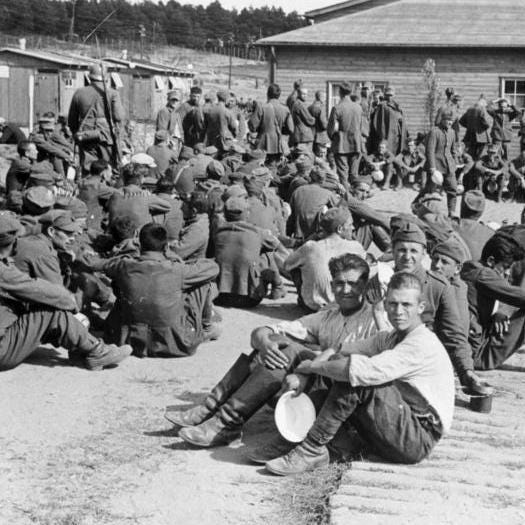
The surviving troops became POWs and were sent to Stalag IV-A. After spending ten days in the dark and rain, Eugeniusz managed to escape. He made his way back to his parents, who were still in Toruń, and there, under the German occupation, he managed to get a job in a saddler’s workshop, where he would, oddly enough, fix cars as well. However, as you can already tell, he was a young man, filled with disappointment, anger and motivation to do something and that something was to join the resistance, which was created from the moment that the Germans crossed that border and attacked Poland.
Now, when I refer to the resistance, I am not talking about the Home Army, because it was officially created on 14 February 1942. It merged multiple resistance organisations to create one large force that would become the largest resistance movement in Europe during the Second World War. I am referring to one of the many different resistance movements. But back to the story……
As time passed, the occupation in Poland got worse and worse. Terror began instantly the moment the Germans crossed that border, and it only intensified. A curfew was implemented, people (especially young people) were arrested, and they were rounded up en masse. The Germans took over forts, prisons, etc., and turned them into places of hell and torture. They also confiscated businesses, houses, etc., including Eugeniusz’s parents’ home and their businesses.
I am going to press pause on Eugenusz’s story because, at this point, the stories of all three brothers will collide. Longin the middle brother is next. When the war broke out in September 1939, he was still in Secondary School (or, for my American readers, High School) in the city of Toruń. Like many young people his age (17), he was mobilised and joined the fight against the invading German Army. Unfortunately, he isn’t as detailed as his brother about what he went through and his feelings at the time. Still, we can imagine the fear such a young person would go through with bullets whistling past you and the continuous air raids and bombs exploding around you.
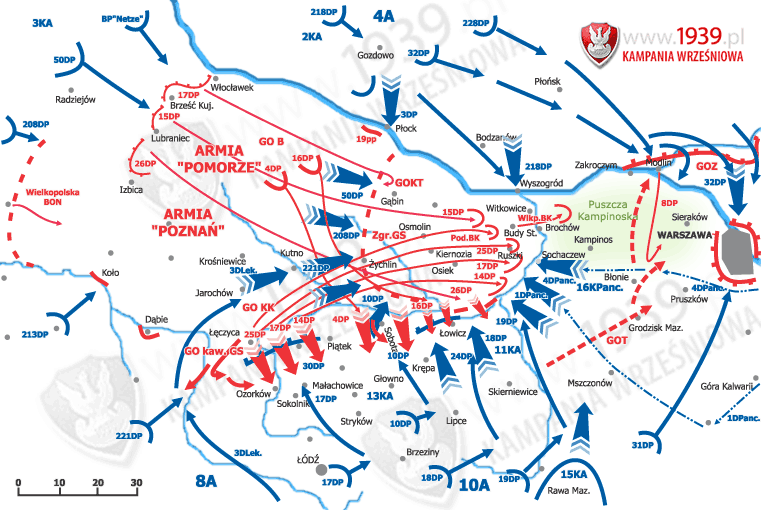
He also fought in the largest and most famous yet tragic battle of Bzura. Let’s talk about it super quick because it is quite something.
On 9 September 1939, the Polish “Poznań” Army launched a counteroffensive against the German Army, which caused significant losses on the German side. The German Army had superior armour, an air force, and weapons, yet the Poles still managed to gain small advantages. The battle was broken up into three phases. I am not going to go through all the details because I really suck at military history. But there will be someone, most likely my friend Dawid, who will call me up and tell me there is a mistake. But back to Bzura…..
Eventually, the surviving soldiers retreated northward towards Warsaw. The battle claimed the lives of 17,000 Polish soldiers and approximately 7,000 German soldiers, with thousands more wounded and captured. The Poles managed to slow the German Army’s rapid advance, allowing Warsaw to prepare its defences. Still, the capital would eventually be taken and partially destroyed.
Ok, so of course I have diverted you all from the actual story of the brothers, so back to them. Longin (the middle brother), like Eugeniusz, was taken prisoner after the battle of Bzura, and, like his big brother, he also escaped, this time with three friends. and headed back to Toruń, where he was reunited with his family, and, just like his older brother, he got a job. Unfortunately, we don’t know what the youngest brother, Jerzy, was doing during the September campaign because he left no testimonies. Still, I can speculate, and I am guessing, because of his age, he was with his parents in Toruń and had to brace himself for the terror sweeping across Poland.
And this is where I can continue the story of all three brothers. Their father was secretly informed by a friend who was drafted into the German Army that there was going to be a roundup of young men under the age of 20. The Hejka family believed they would be forced into the German Army, and they did not want to fight on the side of the Germans. That is obvious because the two eldest brothers risked their lives during the September campaign.
This part of Polish history is quite complicated because the Pomeranian areas and the Silesians were considered German, not Polish. If you were of German heritage, you were forced to sign the Volksliste or German People’s List and then given a choice: a concentration camp or the Army. This is why places like Auschwitz were filled with Silesians who refused to betray their country; they identified themselves as Polish Silesians, not German. This is a very simplistic explanation, but it could also be an article for the future.
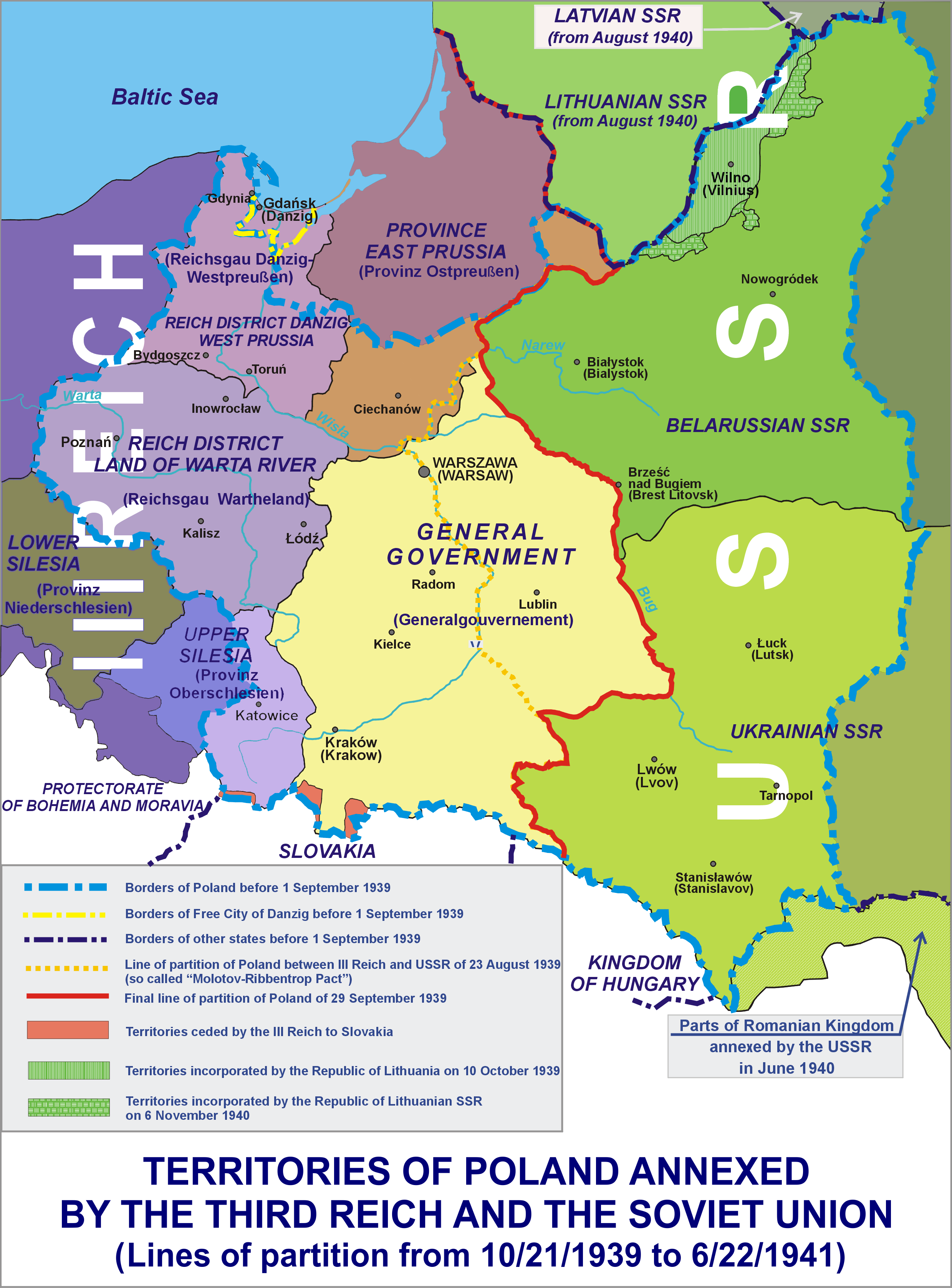
Now, the three brothers had quickly decided they would not be forced to join the German Army; instead, they would try to cross the Polish-Slovakian border and join the Polish Army in France. (By this point, the Polish Army had regrouped in France, and France had not yet fallen). Of course, two out of the three already had military experience. But before they could head for the border, they had to cross to the General Government first.
The General Government, what is that? Well, when the Germans occupied Poland, they split the territory they occupied in half (the Soviets took the eastern half). One half was incorporated into the Third Reich, and the other became the General Government, Poland, under occupation. The General Government was split into four, later five, districts (after the invasion of the Soviet Union), each with its own Governor. Overall, the big boss was Hans Frank, the guy who moved into Wawel Castle and called it home. Toruń fell within the area absorbed into the Third Reich, and the brothers had to cross into occupied Poland before reaching Slovakia.
So how did they do that? Well, first of all, to avoid any suspicion or any spies who may have been lurking about, the brothers split up; the eldest, Eugeniusz, went to the train station with his sisters, and the younger two made their own way. The plan was to meet on the train. As Eugeniusz walked to the station, he realised that he was filled with sadness. He did not want to leave his beautiful city and his loved ones behind. As he gazed around, trying to take in as much of the town as he could, he realised that the flowers were in full bloom, the roses blossoming. The sun was shining bright; it was a typical May day.
The two younger brothers had already boarded the train and were sitting in their seats, waiting for Eugeniusz to join them; however, he was still on the platform with his sisters, comforting and hugging them as they cried on his shoulders. They did not want him to leave. It was then that Eugeniusz realised the train had started to move, it was leaving the platform, and he wasn’t on it. He had missed the announcement that told passengers the train was leaving. Nothing was going to stop him; he jumped the fence that separated him from the platform and jumped into the last carriage as it was departing. This carriage was a special one; the windows were barred, and there was a guard inside who swiftly kicked Eugeniusz as he ran through and out to find his brothers, who found this whole ordeal hilarious and spent the rest of the journey laughing at their older brother.
The train reached Tomaszów Mazowiecki, which was close to the border between the General Government and the Third Reich. Their guide helped them cross on a cloudy night. Everything went smoothly, and they reached Warsaw, where they stayed the night at a friend’s parents’ house. The parents were terrified to put the three brothers up as they were heading to France, and if they were caught and gave up the friends’ parents, they themselves could be arrested or even shot.
The following morning, they left early and headed to Kraków. They arrived that same day and met their guide. These guides would risk their lives helping people cross the borders, and many would lose their lives or be arrested and sent to concentration camps. The Slovak border guards were also pretty ruthless, as they would work closely together with the Germans, handing over any Poles or Polish Jews. They would hunt down and try to catch anyone crossing the border.
Back to Kraków and the brothers… they were supposed to leave the same day they arrived, but because the Gestapo was organising roundups throughout the city’s streets, they had to stay and wait a few days. When the day finally came, they left Kraków with a new guide and a light drizzle that eventually turned to a downpour. The brothers were not alone on this journey; with them were civilians and others trying to cross the borders like them. The rain became unbearable for the civilians, and they began loudly complaining. One in particular began to pray really loudly, and the guide tried to silence him, but it was just too late, as they were heard by the border guards. They yelled for the group to stop and put their hands up, but not everyone did. The guide and three others managed to run despite the heavy gunfire pointed in their direction. We don’t know what happened to them. But I know you all want to know what happened to the brothers….
Eugeniusz had the chance to run, but he didn’t. He stayed with his brothers because they were caught and were standing with rifles pointing at their backs. They begged Eugeniusz not to leave them, so he didn’t. He was their big brother; he wasn’t going to leave them behind. This wouldn’t be the last time he would sacrifice himself for them. Eugeniusz believed that they would all be shot together, and he would rather be with them than abandon them.
About 10 days before they tried to cross the border, the order was revoked, and instead, most of these people who would be caught, like the brothers, would end up in Auschwitz. They would be known as “tourists”, people trying to cross the border to join the Polish Army in France. Most of them would be young men like the brothers in our story, and many of them would be murdered in the pit of hell, Auschwitz.
This is where I will stop for now, part 2 will be available soon!
-A-